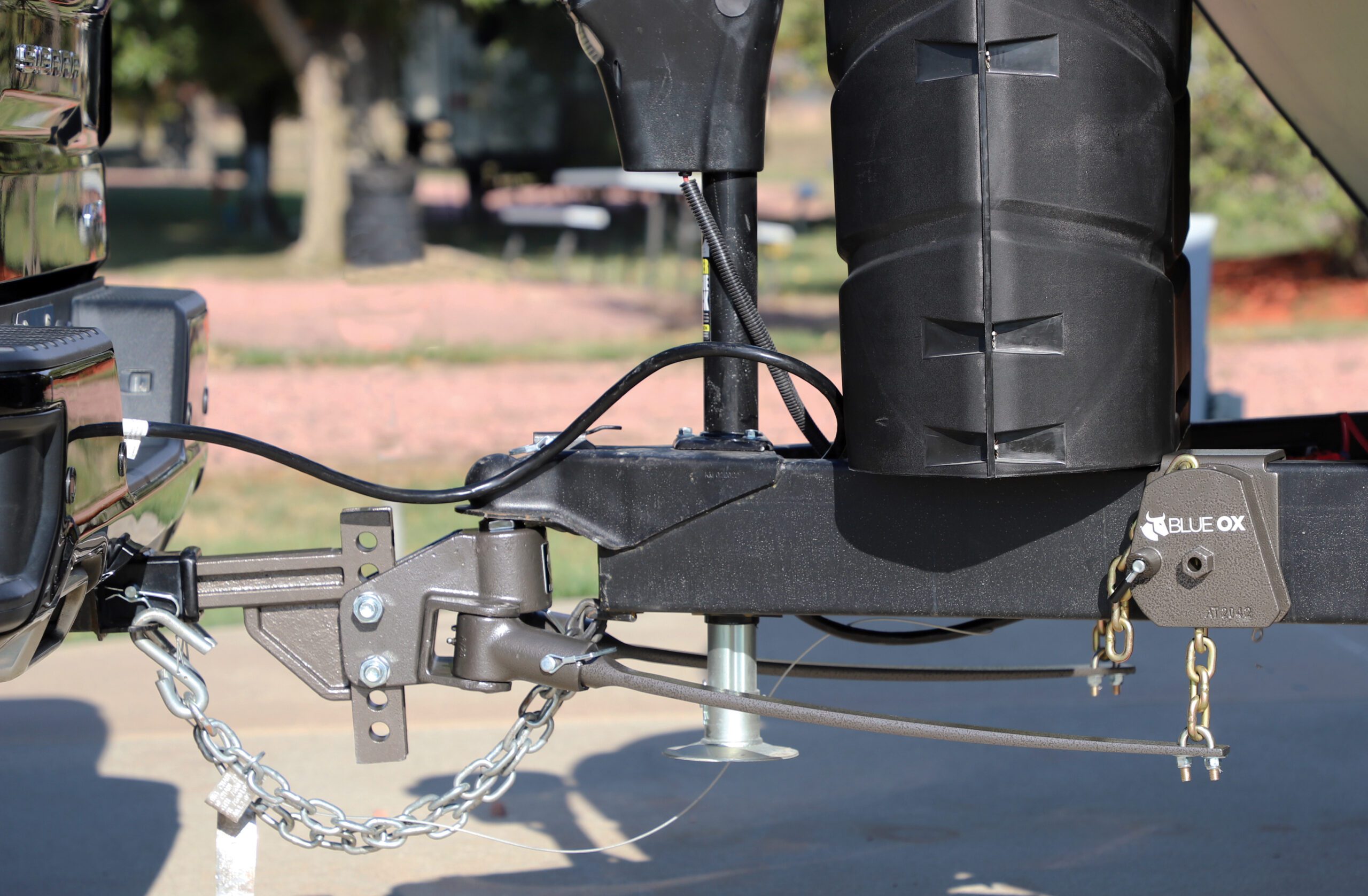
If you’ve ever driven down the highway and felt your trailer start to push around behind you, you already know why a weight distribution hitch matters. The question is: which one do you need?
Choosing between the SwayPro and TrackPro comes down to how you tow, what you tow, and the level of sway control you want working behind the wheel. Both systems distribute trailer tongue weight evenly across your axles to improve stability and handling, though they take different approaches to managing sway.
This guide walks through how each hitch works, where they overlap, and what sets them apart so you can match the right system to your rig with confidence.
How SwayPro and TrackPro are Similar
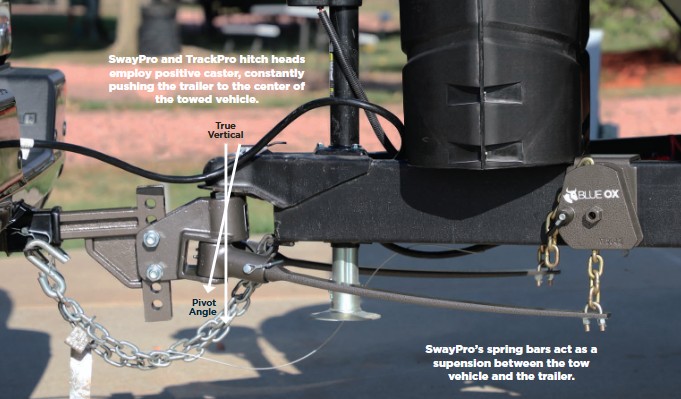
Before comparing differences, it helps to understand that the SwayPro and TrackPro share the same core design. That shared foundation means you get consistent build quality and proven weight distribution performance no matter which system you choose.
Integrated Positive Caster for Continuous Control
Both hitches have integrated positive caster built into the hitch head. This design works alongside the loaded spring bars to continuously push the trailer back toward center while you drive. As you tow, that force encourages your trailer to stay aligned behind your vehicle instead of drifting side to side. You do not need to add or adjust separate sway control components to get this benefit. The system works automatically as long as the hitch is properly set up.
Premium Build and Corrosion Resistant Finish
Both hitches use the same premium textured powder coat over e-coat finish from Blue Ox’s TTX paint facility. This finish protects against rust and road wear, even if you regularly tow in rain, snow, or road salt conditions. It’s the same process that gives Blue Ox hitches their industry-leading rust protection, and both carry a limited lifetime warranty.
Spring Steel Bars
Both hitches use spring steel bars that flex under load to augment the suspension of your tow vehicle and trailer. This is what actually distributes the tongue weight across your axles, distributing the load evenly so you’re not pushing all that weight through the back of your truck. This redistribution improves steering response, braking performance, and overall control.
The bars are also interchangeable. If your tongue weight changes because you upgrade to a larger trailer, you can swap in a heavier set of bars without replacing the hitch head. You’re not buying a whole new system, just the bars that match your new load.
User-Friendly Hookup and Towing Experience
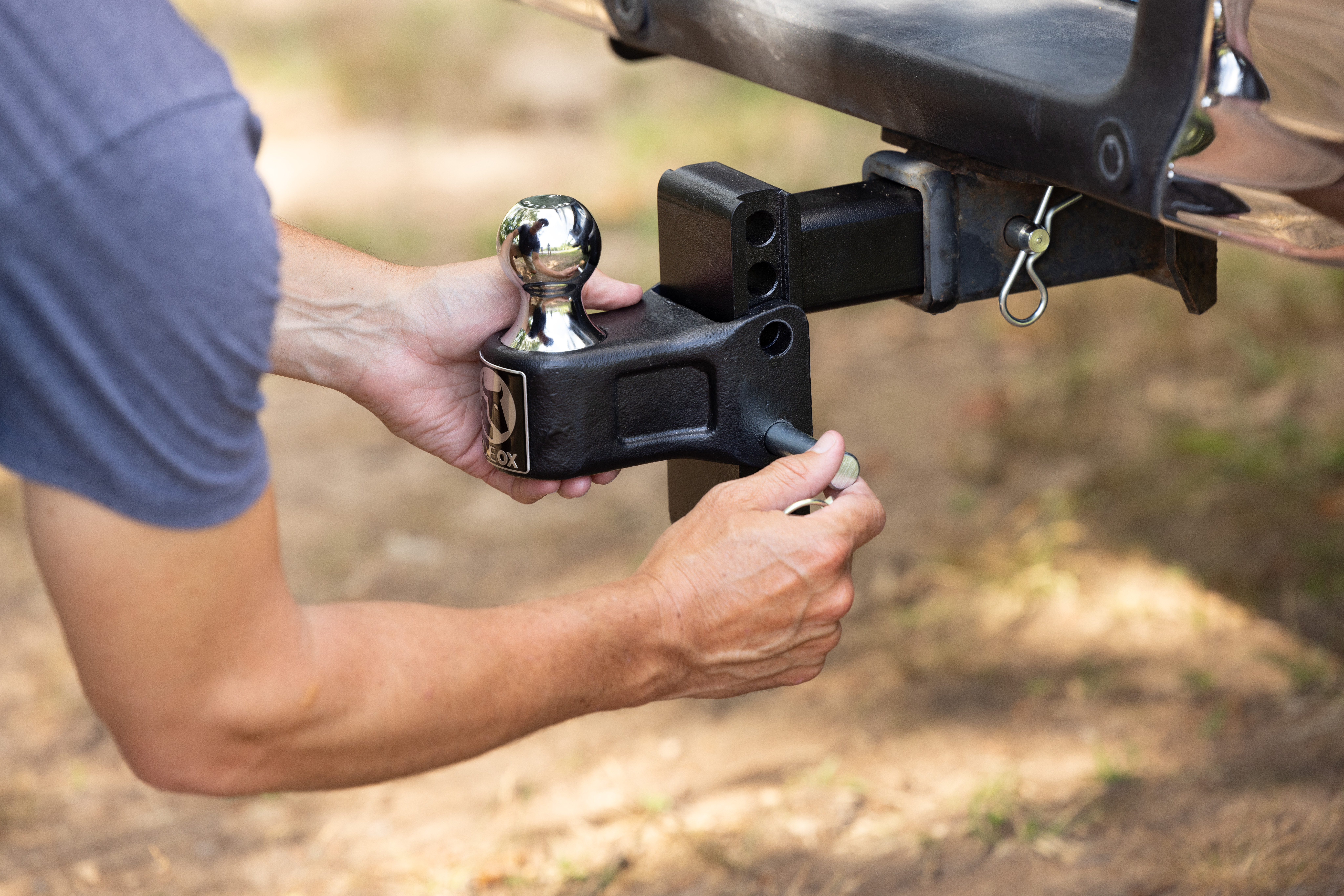
Both SwayPro and TrackPro let you back up without disconnecting from your trailer. Each system comes standard with a 2-inch receiver shank, with 2.5-inch options available for heavier-duty trucks. A pre-installed 2-5/16-inch hitch ball simplifies setup, and underslung configurations are available for rigs that require additional drop.
How Are SwayPro and TrackPro Different?
The key difference between the SwayPro and TrackPro comes down to how each system manages trailer sway. While the weight distribution function remains the same, the sway control approach changes how the hitch performs in different towing conditions.
SwayPro: Rotating Latches and Active Sway Prevention
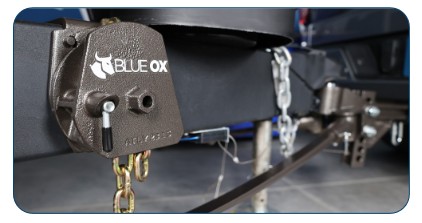
The SwayPro focuses on preventing sway before it begins. The hardware that makes this possible is the rotating latch system. The wrap-around latches clamp onto the spring bars quickly and securely, without pins or clips. Hookup is faster than traditional snap-up methods, and there’s no fumbling around with small pins or clips that you may drop in a campsite parking lot at sundown or during bad weather. It also performs consistently in rain, snow, or any conditions you’re towing through. No degradation, no adjusting. Drivers who tow frequently or cover long distances often appreciate how the SwayPro maintains steady control with minimal input. The system continues working in the background, helping reduce driver fatigue over time.
TrackPro: Friction-Based Sway Management with Offset Backing Plate
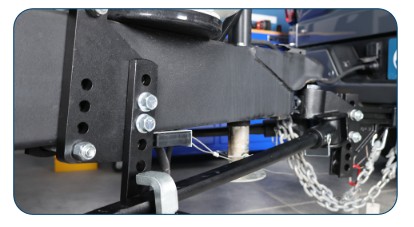
The TrackPro takes a different approach by managing sway through friction rather than actively centering the trailer. The offset backing plate positions the pivot point closer to the front of the trailer, while rigid L-brackets create resistance that limits side-to-side movement. This setup delivers dependable sway control for trailers up to 13,000 pounds GVWR. It performs well in predictable towing conditions, including highway travel and moderate crosswinds. The friction-based system provides a steady, controlled feel that many trailer owners find reliable for routine trips. Drivers who want a straightforward, effective hitch without stepping into higher weight capacities often find the TrackPro meets their needs.
Side-by-Side Comparison
Looking at the SwayPro and TrackPro side by side helps clarify how their sway control systems differ while sharing the same structural design. The comparison highlights how each hitch handles movement, the max GVWR, how quickly you can hook up, which setups each system supports best, and more.
| SwayPro | TrackPro | |
|---|---|---|
| Sway approach | Active prevention. Noise-free sway prevention that never stops working, even in rain or snow. Uses integrated positive caster and rotating latches. | Friction management. Rigid L-brackets add extra sway-controlling friction. Offset backing plate helps pivot and control trailer sway. |
| Key hardware | Wrap-around rotating latches; no pins or clips to lose | Offset backing plate toward front of trailer; rigid L-brackets |
| Max GVWR | 20,400 lb | 13,000 lb |
| Tongue weight range | 200–2,000 lb | 350–1,300 lb |
| Receiver compatibility | 2″ standard; 2.5″ shank available (required for BXW2000) | 2″ standard; 2.5″ shank available |
| Hitch ball | Pre-installed 2-5/16″; underslung versions available | Pre-installed 2-5/16″ (BXW0650: 2″ ball); underslung versions available |
| Hookup ease | Easier. Rotating wrap-around latches; no pins or clips to lose | Standard L-bracket snap-up attachment |
| Weather performance | Full performance in rain, snow, and all conditions | Friction-based; performance may reduce slightly in icy or wet conditions |
| Finish | Premium textured powder coat over e-coat (TTX paint facility), limited lifetime warranty | |
| Spring steel bars | Swappable spring steel bars that augment tow vehicle and trailer suspension; can be swapped with changing tongue weights | |
| Back up without disconnecting | Yes | Yes |
| Best for | Heavy towing, all-weather, ease of use. Larger trailers, frequent hitching/unhitching, varied weather conditions. | Mid-weight trailers, value. Trailers up to 13,000 lb GVWR, stable sway conditions, budget-conscious buyers. |
Which One Should You Choose For Your Towing Needs?
Choose the SwayPro for quieter towing and easier adjustment on the road
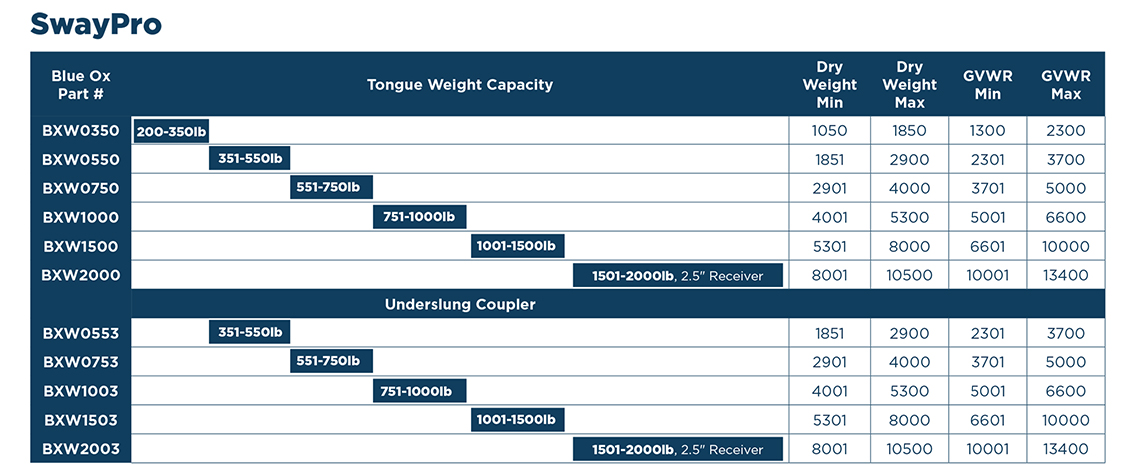
The SwayPro fits best in situations where higher weight and more demanding conditions come into play. Drivers towing larger travel trailers, toy haulers, or heavy cargo loads often prefer the added control that comes from active sway prevention. SwayPro may work best if:
- Your trailer’s GVWR is above 13,000 lb (only the SwayPro goes up to 20,400 lb)
- Your tongue weight is over 1,300 lb
- You tow frequently and want the fastest, simplest hookup
- You often tow in rain, snow, or unpredictable weather
Choose the TrackPro for Sway Control with a more traditional bracket for harder-to-access frames
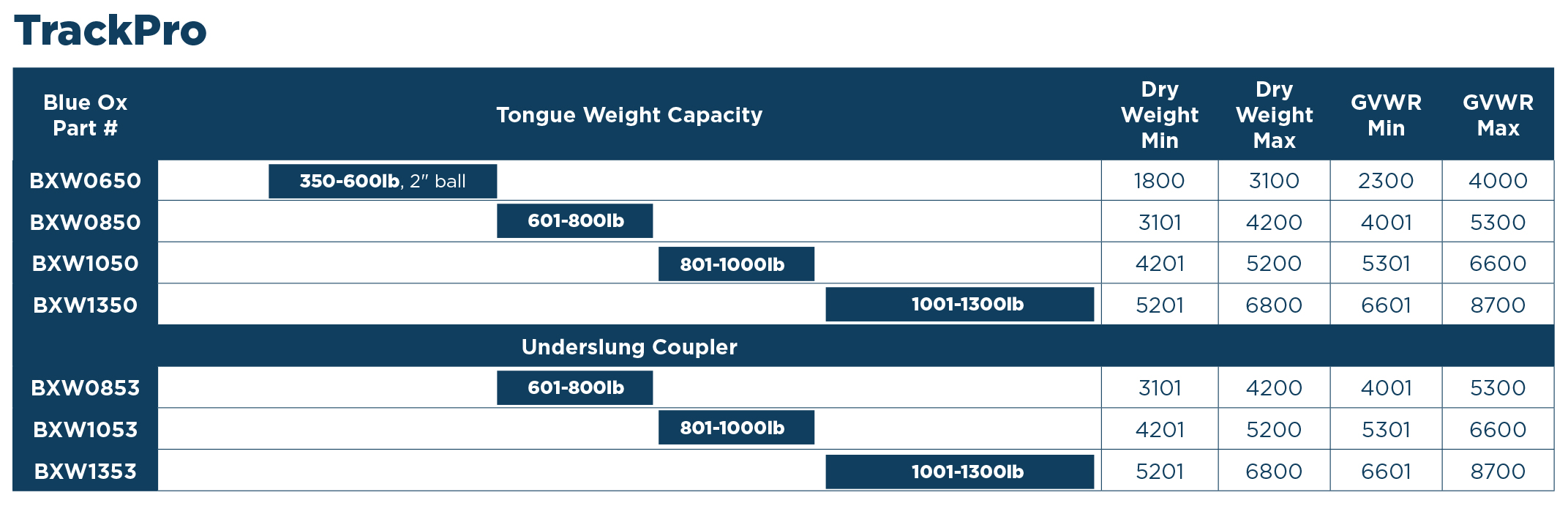
The TrackPro works well for standard towing setups that stay within moderate weight ranges. This hitch provides dependable performance without unnecessary complexity, making it a solid choice for many travel trailer owners. TrackPro may work best if:
- Your trailer is up to 13,000 lb GVWR
- Your tongue weight is between 350–1,300 lb
- Your towing conditions are generally stable
- You want a proven, capable hitch at a more accessible price point
A Note for Toy Hauler Owners
If you’re towing a toy hauler, your actual tongue weight isn’t the same as what’s stamped on the trailer. Loading equipment behind the rear axle shifts weight away from the tongue, which changes how your hitch performs.
How Load Placement Affects Tongue Weight
Placing a toy behind the rear axle reduces tongue weight more than expected. Even partial placement over the axle still shifts weight, though not as dramatically. This change impacts how your weight distribution hitch transfers load and controls sway.
Calculating Your Actual Tongue Weight
Use this formula to calculate your actual tongue weight before choosing a hitch:
Toy loaded behind the rear axle:
Tongue Weight – ((Toy Weight x 25%) + Fuel Weight) = Actual Tongue Weight
Toy loaded over the rear axle (partially):
Tongue Weight – ((Toy Weight x 12.5%) + Fuel Weight) = Actual Tongue Weight
These calculations provide a starting point, though a tongue weight scale gives the most accurate reading. Dialing in the correct tongue weight ensures your hitch performs as intended and helps you select the correct spring bars.
Why Accuracy Matters
Incorrect tongue weight leads to poor weight distribution, reduced braking control, and increased sway. Taking the time to measure and adjust your setup protects your investment and improves safety every time you tow.
Practical Tips for Getting the Most Out of Your Hitch
Once you select the right system, proper setup and usage make a noticeable difference in performance.
Setup Tips
- Adjust spring bar tension evenly on both sides
- Keep your trailer level or slightly nose-down
- Recheck torque settings after your first few trips
- Inspect brackets and latches regularly for wear
On-the-Road Tips
- Reduce speed in strong crosswinds
- Distribute cargo evenly inside the trailer
- Avoid sudden steering inputs whenever possible
- Check hitch components during fuel stops on long trips
Still Not Sure? We Can Help.
Every towing setup comes with its own variables, and choosing the right hitch can feel like a big decision when you are balancing weight, performance, and budget. The SwayPro and TrackPro each bring proven solutions to the table, and the right choice depends on how your trailer is loaded and how often you tow.
Browse Blue Ox weight distribution hitches online or connect with a product specialist at 800-228-9289 or email info@blueox.com. Our team can walk through your specific rig and help you pick the right hitch and tongue weight range for your setup.
Find the right hitch for you using the SwayPro Hitch Finder or the TrackPro Hitch Finder.